
An unusual crochet pattern should make you want to reach for your hook, not merely admire someone else’s finished photo. Maybe that means a tiny creature with a ridiculous expression, a statement hat for a costume party, a textured accessory, or a project that turns an everyday object into something cheerfully odd. The best choice is not automatically the strangest one. It is the idea with enough character to keep you curious through the ordinary rows, and enough clarity to help you enjoy the making when the clever part needs a little patience.
Decide what kind of unusual you mean
“Unusual” can mean a dozen different things in crochet, which is why a broad search can feel both exciting and completely unhelpful. You may be drawn to a familiar object made with an unexpected detail, such as a hat with ears, a floral square in wild colors, or a pouch with a tiny character face. You may want a project with an unusual silhouette, a fantasy creature, a theatrical costume piece, or a useful item that feels much more personal than the usual version.
Before saving twenty tabs, choose the reaction you want the finished piece to create. Do you want someone to laugh when they see it? Do you want a project that feels a little magical, a little gothic, cozy, nostalgic, or wonderfully specific to one friend? That feeling gives you a better filter than the word “weird.” A project with a clear mood is easier to choose yarn for, easier to finish, and more likely to become something you actually use or give away.
Search results show that unusual crochet can range from quick novelty accessories to elaborate art pieces. That variety is lovely, but it also means a maker needs to separate the idea from the commitment. A pizza-shaped bandana and a sculptural wall hanging may both be unusual, yet they ask for completely different afternoons. Let the finished object catch your eye, then look closely at the construction before you decide it belongs in your next-project basket.
A useful rule is to choose one source of surprise. The project might have an unexpected subject, a special texture, a bold color story, or dramatic shaping. It does not need all four. One strong idea gives a crochet piece personality. Too many ideas at once can make a pattern hard to read and harder to wear, use, or finish.
Start with a shape you already understand

The gentlest way into unusual crochet patterns is to begin with a construction you already know. If you have made a basic hat, a version with ears, a dramatic brim, or a color-blocked crown may be a satisfying next step. If you enjoy granny squares, try a floral motif or an unusual palette before taking on an entirely new garment shape. If you have made small toys, choose a creature with one unfamiliar feature instead of a design that asks you to learn every possible technique at once.
This approach protects the fun. When the base of a project feels familiar, your attention is free for the detail that makes it special. You can spend your energy on placement, expression, color, or finishing instead of wondering what every row is trying to do. It also makes troubleshooting less dramatic. If the unusual brim, horn, wing, or applique needs a second try, you still understand the rest of the pattern.
A clear pattern description should tell you whether the piece is worked in rows or rounds, whether it needs assembly, and whether the shape relies on increases, decreases, stiffening, or a particular yarn weight. The Craft Yarn Council’s guide to reading crochet patterns is a helpful refresher on abbreviations, repeats, rows, rounds, increases, and decreases. Those little terms are not glamorous, but they tell you far more about a project’s real personality than its prettiest photo does.
If you are still building confidence, choose a small finish. A hat, pouch, small creature, collar, or motif lets you explore an unusual idea without turning it into a season-long obligation. A quicker project gives you useful information: whether you enjoy the theme, whether the yarn behaves well, and whether you want to take the idea further next time.
Read the pattern description like a maker
A playful photograph can make almost any pattern look easy. Slow down long enough to read the listing as though you are about to begin. Look for the finished size, yarn weight, hook size, skill notes, included photos, and the format of the instructions. Check whether a digital pattern uses U.S. or U.K. crochet terms, especially if you are used to one set of abbreviations. Small differences in language can change the result, and no one needs that kind of surprise halfway through a beloved project.
For a shaped or character-led project, photos from more than one angle are especially valuable. They help you see how a brim sits, where an ear is attached, whether a tail supports the balance, or how large a finished plush actually is. A pattern with assembly guidance is often a kinder choice than one that leaves the most distinctive features to guesswork. The most unusual part of a project should feel like a satisfying puzzle, not a secret test.
Notice the extras too. If a project calls for safety eyes, stuffing, a stiffener, wire, a lining, or a special button, decide before you buy whether that is part of the fun for you. A great pattern can be worth learning for, but it should be an intentional learning moment. A materials list gives you permission to say, “I love this, but not for this week,” and save it for the right season.
It is also worth checking what you are purchasing. TrebleTwist pattern listings are digital instructions, not finished objects, and the listing says so clearly. That distinction matters across every pattern shop. A good description tells you what arrives, what you need to supply, and what the finished piece is meant to become. Clarity is not boring. It is what lets a quirky project stay delightful after checkout.
Let yarn and color carry part of the idea
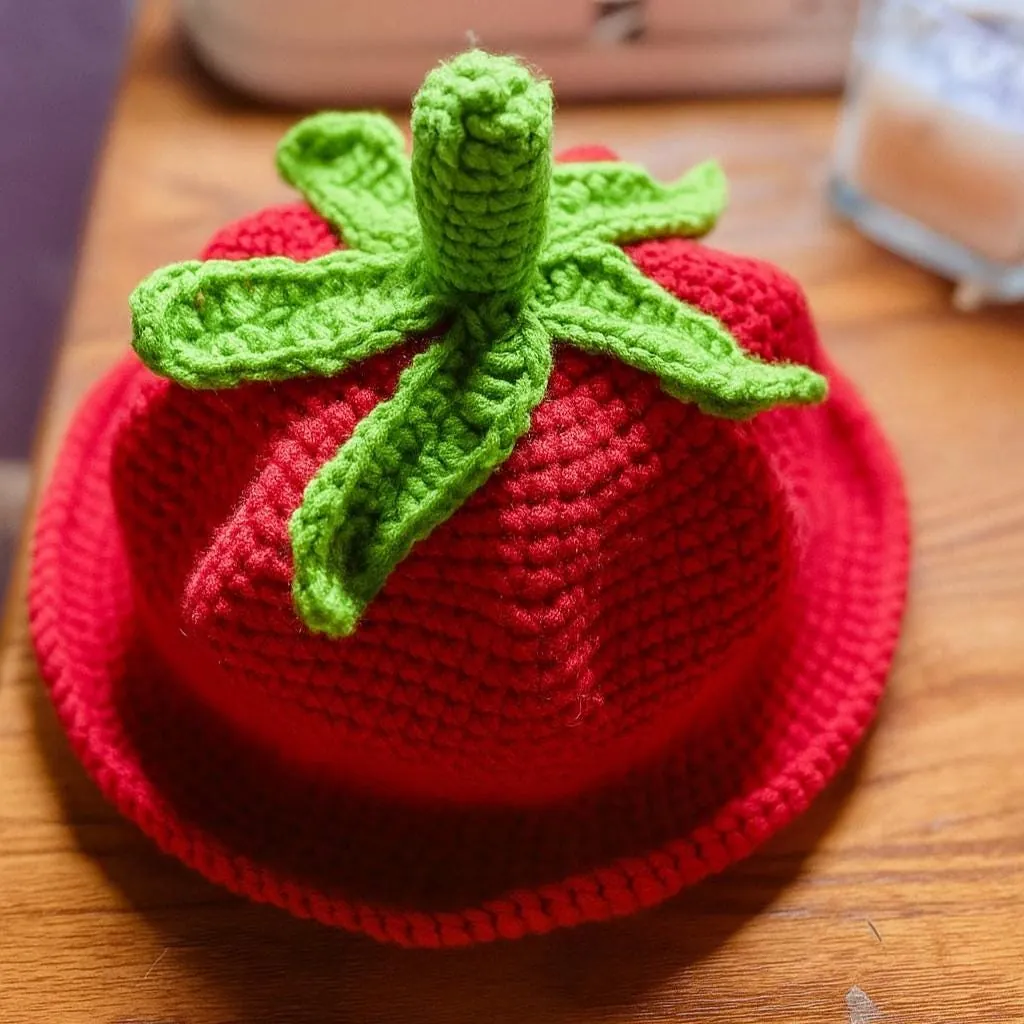
Color is one of the easiest ways to make unusual crochet patterns feel intentional rather than accidental. A familiar shape can become a character piece with one unexpected color pairing. Think berry red and leaf green for a food-inspired make, velvet black and brass for a costume detail, or a handful of garden colors for a floral motif. You do not need a giant yarn haul. Two or three colors with a clear relationship are often enough.
Match the yarn to the job the project needs to do. A fluffy yarn can make a creature feel soft and mysterious, but it can also hide stitches when you are learning a new shape. A smooth yarn makes counting and placement easier. A sturdy yarn helps a brim, pouch, or decorative object hold its form. When a pattern suggests a yarn weight, treat that as useful information about the shape, not a decorative recommendation you have to ignore in the name of creativity.
If you want to substitute yarn, make a small test before committing. Check whether the fabric becomes too loose, too stiff, too heavy, or too holey for the design. This is particularly important for stuffed pieces, hats, and anything that needs to keep a recognizable outline. Swatching does not steal spontaneity from an unusual project. It lets you play with more confidence because you know the material will support the idea.
Give yourself one place to be daring. It may be the main color, a contrasting trim, sparkly yarn for a detail, or a lining that only you will see. A single choice with conviction usually reads better than changing every part of a well-designed pattern at once.
Choose one new technique, not a whole obstacle course
Many unusual crochet patterns get their charm from one technique that sits just outside the usual routine. It might be shaping a curve, sewing on a feature, working around wire, changing colors neatly, or adding an applique. That is a wonderful reason to choose a project. It gives your hands something new to learn while the rest of the pattern gives you enough familiar ground to stand on.
Try naming the one part that makes the project feel unusual. Then ask whether you are curious about learning it. If the answer is yes, you probably have a good stretch project. If the answer is “I am already tired thinking about it,” there is no shame in choosing an easier version of the same mood. A small dragon may be more inviting than a full costume. A flower square may be a better first step than a whole floral blanket. A playful hat may give you the same delight as a highly structured headpiece.
You can practice the new part separately. Work a few increase rounds, try a color change, make one tiny ear, or test a seam with scrap yarn. Ten calm minutes often answer the questions that can otherwise keep a project sitting in a cart for weeks. The sample does not have to be beautiful. It only has to show your hands what the pattern will ask of them.
For a refresher on the building blocks, the different crochet stitches guide walks through familiar stitches and where they can take a project. Those basics are not the opposite of imaginative work. They are the quiet foundation that lets the unusual detail shine.
Give a character-led project a calm home

A project with an unusual shape often has more little pieces to protect: a printed pattern, a special hook, several colors, safety eyes, stuffing, a measuring tape, or notes about where the next feature belongs. Keeping them together makes it easier to return to the project without losing the thread of the idea. A small pouch is lovely for notions, while a roomy tote gives yarn and a work in progress room to travel without becoming a knotty mystery.
This does not need to become a complicated organization project. Keep only the materials for the make you are working on now. Put the pattern, yarn, and tools back in the same place after each session. That little ritual is especially helpful when a project relies on placement or counting, because it keeps the next step close at hand instead of scattered across a table.
TrebleTwist makes handmade crochet project bags for yarn, active makes, and the tools that travel with them, plus hook cases that keep favorite hooks visible and protected. They are a practical companion to a pattern with personality: the project stays ready to pick up, while the handmade storage has its own quiet bit of charm.
If your chosen project is small, keep the whole kit simple. A hook, a skein or two, the pattern, and a little pouch for the extras may be all you need. The right amount of organization is the amount that gets you back to making faster.
Find the pattern that keeps calling you back
When you are choosing among unusual crochet patterns, the best sign is rarely a label like “advanced” or “viral.” It is the project you keep thinking about after you have looked away. Maybe you imagine who would laugh when you gift it. Maybe you can already see the color combination. Maybe one little feature makes you want to learn how it is done. That lingering pull is often more useful than chasing the most complicated idea in the room.
Keep a short wish list with three headings: make soon, learn next, and admire from afar. “Make soon” is for projects that fit your current yarn, time, and skills. “Learn next” is for patterns that ask for one new thing you genuinely want to try. “Admire from afar” is for glorious ideas that deserve to wait until the timing is right. This keeps inspiration from turning into pressure, and it makes your next choice much easier.
TrebleTwist’s collection of unique crochet patterns is a good place to browse when you want a project with a little more character, from friendly creatures and playful food-inspired makes to costume-ready pieces. Read the listing, choose the idea that feels like yours, and let the next ordinary evening become a little less ordinary.
- Choose the feeling you want the finished piece to have.
- Pick a familiar base shape with one memorable detail.
- Read the materials, format, and skill notes before you begin.
- Test one new technique with scrap yarn if it feels unfamiliar.
- Keep the pattern, yarn, hooks, and small parts together between sessions.
Good to know
Frequently asked questions
What makes a crochet pattern unusual?
An unusual crochet pattern has one clear point of view, such as an unexpected subject, a playful shape, an imaginative texture, or a strong color idea. It does not need to be technically difficult. A familiar project with one memorable detail can feel wonderfully original.
Are unusual crochet patterns good for beginners?
They can be. Start with a small project that uses familiar stitches and asks you to learn one new thing, such as simple shaping, an applique, or a color change. A clear materials list and step-by-step photos make a character-led project much easier to enjoy.
How do I choose yarn for an unusual crochet project?
Follow the suggested yarn weight first, especially when the project needs to hold a shape or fit well. Choose color and texture to support the idea, then make a small test if you are substituting yarn. Smooth yarn is usually easier for learning a new shape, while fluffy yarn can hide stitches.
Can I change an unusual crochet pattern to make it my own?
Yes, but begin with one thoughtful change, such as a color palette, contrasting trim, button, or small applique. Keep the main construction close to the instructions when fit, balance, or structure matters. That gives you a personal result with a dependable foundation.
Keep reading
Related posts


